
Distracted Driving Accidents in Georgia What Injured Drivers Should Know

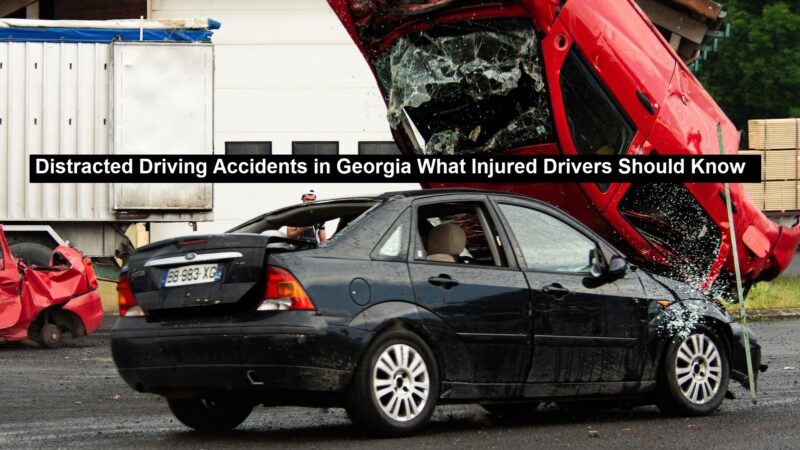
Distracted driving has become a significant road-safety concern as smartphones, navigation systems, and other in-vehicle technology compete for drivers’ attention. A moment spent looking at a text message or adjusting a device can be enough for a driver to miss changing traffic conditions.
For someone injured in a crash involving a distracted driver, understanding how distraction may affect an accident claim can be important.
What Counts as Distracted Driving
Distracted driving involves any activity that takes a driver’s attention away from safely operating a vehicle. Although cellphone use is one of the most recognizable examples, distraction can take many forms.
Common distractions include:
- Reading or sending text messages
- Using social media
- Adjusting a navigation system
- Eating or drinking
- Changing music or vehicle controls
- Reaching for objects inside the vehicle
- Talking with passengers
- Watching or recording videos
Some distractions are visual, while others are physical or cognitive. A driver does not necessarily need to be looking at a phone to become dangerously distracted.
Georgia’s Hands-Free Driving Rules
Georgia has specific restrictions regarding the use of electronic devices while driving.
Under the Hands-Free Georgia Act, drivers generally cannot physically hold or support a wireless telecommunications device while operating a vehicle. The law also restricts activities such as writing, sending, or reading text-based communications and watching or recording videos while driving.
Georgia Department of Driver Services provides additional information about the state’s distracted-driving and hands-free requirements.
A traffic violation and civil liability after an accident are separate matters. However, evidence that a driver was distracted may become relevant when investigating how a collision occurred.
How Can Distracted Driving Be Proven
One challenge in a distracted-driving accident is proving what the other driver was doing immediately before the collision.
Unlike speeding or running a red light, cellphone use may not be obvious from the accident scene. Depending on the circumstances, an investigation might involve several types of evidence.
Witnesses may have seen a driver looking down at a phone. Dashcam or surveillance footage could capture unusual driving behavior. Police reports may contain statements made by the drivers or witnesses.
In appropriate cases, cellphone records and other electronic information may also become relevant.
Preserve Evidence After the Accident
Evidence can disappear surprisingly quickly after a collision.
Photographs should document vehicle damage, road conditions, traffic signals, skid marks, debris, and the surrounding accident scene whenever it is safe to do so.
Witness names and contact information should also be collected. Nearby businesses or homes may have security cameras that captured the collision, but those recordings may eventually be overwritten.
Keeping the police report, medical records, repair estimates, insurance correspondence, and receipts associated with the accident can create a more complete record of what happened.
Read: The Role of Lawyers in Protecting Constitutional Rights
Medical Documentation Is Important
Establishing how an accident occurred is only part of an injury claim. The injured person must also document the injuries and resulting losses.
Some accident injuries may require emergency treatment, diagnostic testing, physical therapy, medication, surgery, or ongoing medical care.
Following medical recommendations and maintaining treatment records can help document the nature and extent of those injuries.
If injuries prevent someone from working, employment records, pay statements, and related documentation may also become relevant when calculating lost income.
Getting Legal Guidance After a Serious Accident
Accidents involving disputed fault or suspected distracted driving can become complicated, particularly when insurance companies begin their own investigations.
An attorney can review available evidence, communicate with insurers, identify additional sources of information, and explain the legal options available under the circumstances.
People seeking guidance after an accident can consult a Personal Injury Law Firm in Atlanta, GA to better understand how Georgia personal injury law may apply to their particular situation.
Final Thoughts
Distracted-driving cases often depend heavily on evidence. A driver’s cellphone activity, witness testimony, video footage, vehicle damage, police documentation, and medical records may all help establish what happened. For an injured person, preserving that information early can make it easier to understand the circumstances of the accident and evaluate the options available for pursuing compensation.



Comments are closed.